

Why You Should Make An Online Driver Improvement Program Part Of Your Teen’s Back-to-School Plan.
Summer went by quickly! And while parents are hurrying to grab backpacks and school supplies, one item that should be considered in the back-to-school plans is an online driver improvement program or defensive driving course. While driver’s education training can be great for getting new teen drivers to the end of earning a Georgia driver’s license, they don’t always prepare new drivers for the unexpected situations that teen drivers can face, especially when returning to school. Check out some of the challenges new teen drivers will face on their back-to-school commute and why getting an online driver improvement program under their belt can help them build confidence as a new driver and bring parents peace of mind.
6 Back-To-School Challenges Drivers Face
1.The 7:30 a.m. Sleep Inertia & Morning Blindness
Studies show that high schools with start times at 7:00 a.m. experience a 25% to 30% increase in teen car accidents compared to schools that start later.
Let’s face it, when teens are juggling an active online social life and sports commitments with a hefty class workload, sleep is often the losing factor. The reality is that most high-schoolers are chronically sleep-deprived. Adding to drowsy driving and slower reaction times is the autumn sun glare of early mornings. Unprepared teen drivers account for 25-30% of off-road collisions in the morning.
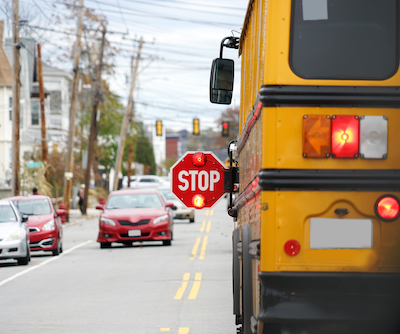
2.The “Yellow Giant” Protocol (School Buses)
While most adult drivers are familiar with sharing the road with school buses, this protocol is new territory for new teen drivers. Bus stops can be chaotic, with younger students being distracted. In addition, while other drivers are aware of bus traffic laws, sadly, many do not always follow them. It is critical that new teen drivers not only know the rules of the “yellow giant” protocol but also how to respond to all scenarios involving unexpected issues arising from bus traffic and bus stop hazards.
3.The Classmate Passenger Multiplier
The NSC analyzed police-reported fatal crash data from 2016 to 2019. They found that for 16- and 17-year-old drivers, carrying exactly one teen passenger doubles the risk of dying in a crash compared to driving completely alone.

It’s just teen nature to want to carpool together to school and school functions. But when combined with mobile devices and typical teen behavior, distractions can have devastating consequences. In Georgia, teen drivers are required to follow strict guidelines regarding fellow passengers for their first year.
The specific non-family passenger rules under Georgia’s Teenage and Adult Driver Responsibility Act (TADRA) are:
-
-
- Curfew: No driving between 12:00 a.m. and 5:00 a.m. under any circumstances.
- First 6 Months: Only immediate family members are allowed as passengers.
- Second 6 Months: Only 1 non-family passenger under 21 is allowed.
- After 1 Year: A maximum of 3 non-family passengers under 21 are allowed.
-
In addition, to receive a Georgia Class D Provisional License is an intermediate driver’s license teens must fulfill the following requirements:
-
-
- Age: At least 16 years old.
- Permit: Held a valid Class CP Learner’s Permit for at least 1 year and 1 day with no major suspensions.
- Education: Complete an approved 30-hour Driver Education course (Joshua’s Law) and pass a Road Skills Test.
- Experience: Log at least 40 hours of supervised driving, including 6 hours at night.
-
4.The High School Parking Lot Chaos
 Driving yourself to high school is not only a rite of passage but, for most teens, a badge of honor. But believe it or not, the parking lot can hold as many dangers as the main road. Teen drivers often face chaos upon arrival. Between students driving a little too fast, uncertainty about parking, narrow lanes, and students crossing between aisles, the school parking lot can present many safety issues. This is especially true with the first week of school.
An online driver improvement program can help new drivers address some of these issues ahead of back to school including elements like space management and low-speed scanning; learning why backing into a space in the morning ensures a safer, panoramic exit at afternoon dismissal.
5.Slick Autumn Roads
Georgia is notorious for its unpredictable weather changes; sunshine and hot one moment, torrential downpours and wild winds the next. Even the most experienced drivers can find themselves in unexpected weather driving situations in the fall. But for new teen drivers, navigating challenging weather and traffic, especially during morning and afternoon rush hours, can cause slight panic. The first and most important step is to slow down. Reminding young drivers that autumn leaves, oil-slicked roads, and clogged storm drains can create impromptu road hazards on normally easy-to-drive roads is crucial to their arriving safely at their destination.

6.Peer Pressure, Speeding, and Impairment
Probably the biggest hazard for new young drivers is simply the urge to get to their destination as quickly as possible. The excitement of high school sporting events, weekend parties, and peer pressure can also have great effects on teens and their driving decisions.
Standard driver’s education can only scratch the surface of these topics. An online defensive driving program can offer deeper insights into these situations and provide new drivers with safe, smart decision-making tools to address these scenarios.
Make Sure Your New Teen Driver Is Prepared With An Online Driver Improvement Program As Part Of Their Back To School Plan.
While as a parent, you can’t be with your teen driver 24-7. But you can make sure they are skilled and prepared for what they will face when they return to school as new drivers.
 1 Day or 2 Nights Defensive Driving and DUI offers an online driver improvement program that can fit within your teen’s busy school and social life schedules. Our defensive driving course provides the critical training to be a confident, educated, and aware driver this school year and for the future.
Kick Your New Driver’s School Year Into High Gear Now, Schedule Defensive Driving Course Now.
FAQs
Can a defensive driving course lower my teen’s Georgia auto insurance?
Yes. Georgia law mandates that insurance companies offer a premium discount (frequently up to 10-15%) to young drivers who voluntarily complete an approved 6-hour defensive driving program with no traffic violations on record.
Does this course satisfy requirements if my teen got a ticket??
Yes. If a court-approved defensive driving course is required, our certified 1-Day and 2-Night tracks meet DDS requirements for official driver improvement, license reinstatement, points reduction, and court-ordered defensive driving mandates in Georgia.
*Please Note: the Defensive Driving Course is different than a DUI Risk Reduction Course, which may be required as part of a mandate by the Georgia courts for a DUI. However, we do offer a DUI Risk Reduction Course to meet these requirements if needed.
My teen already took a Joshua’s Law course. Do they still need this?
Joshua’s Law teaches basic road rules for operating a vehicle to pass the license test. Our defensive driving course focuses strictly on advanced hazard recognition, collision avoidance physics, and real-world split-second decision-making.